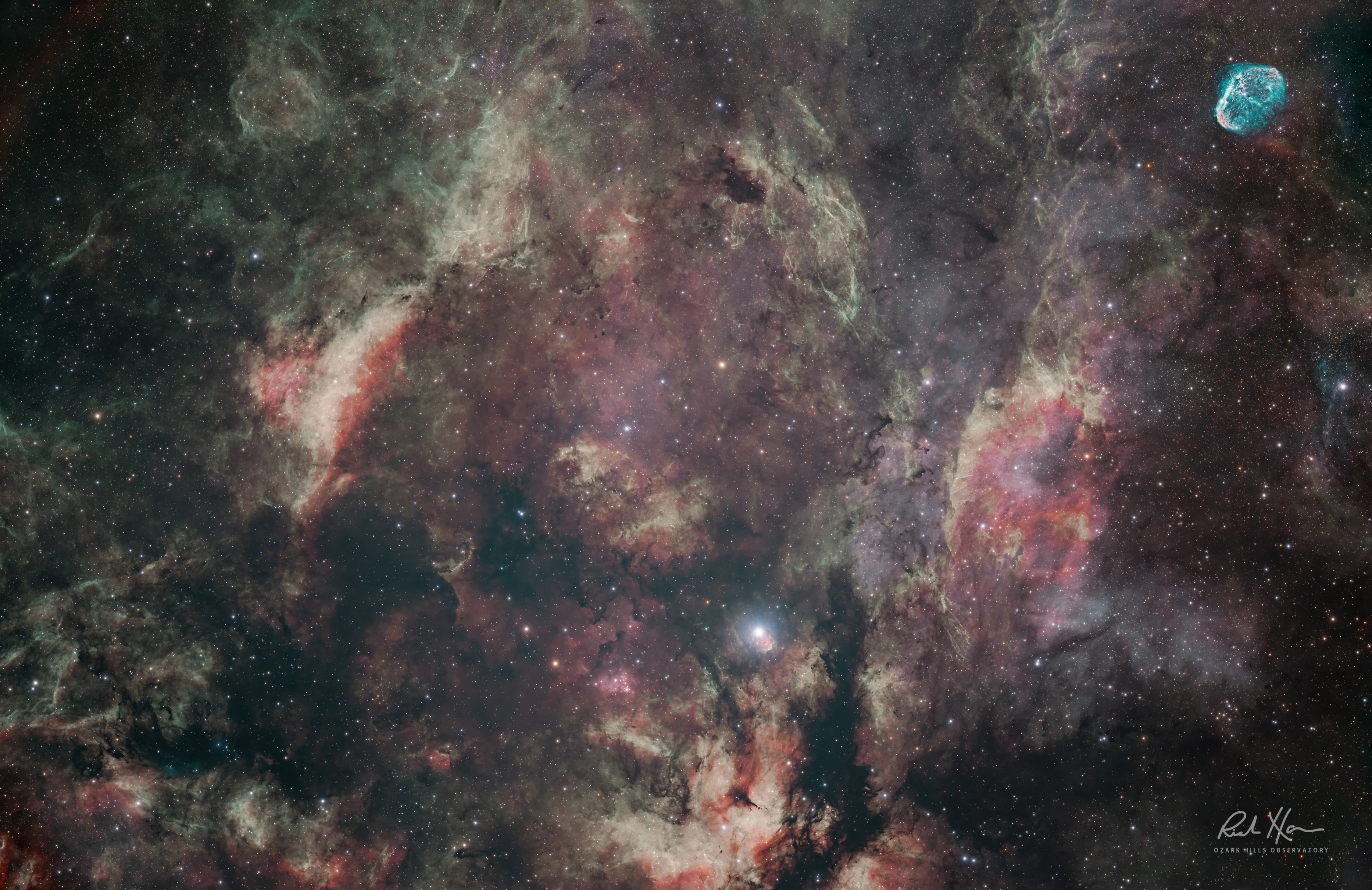
Best astrophoto of the North America Nebula with the Takahashi FSQ-106EDX4 and medium format camera
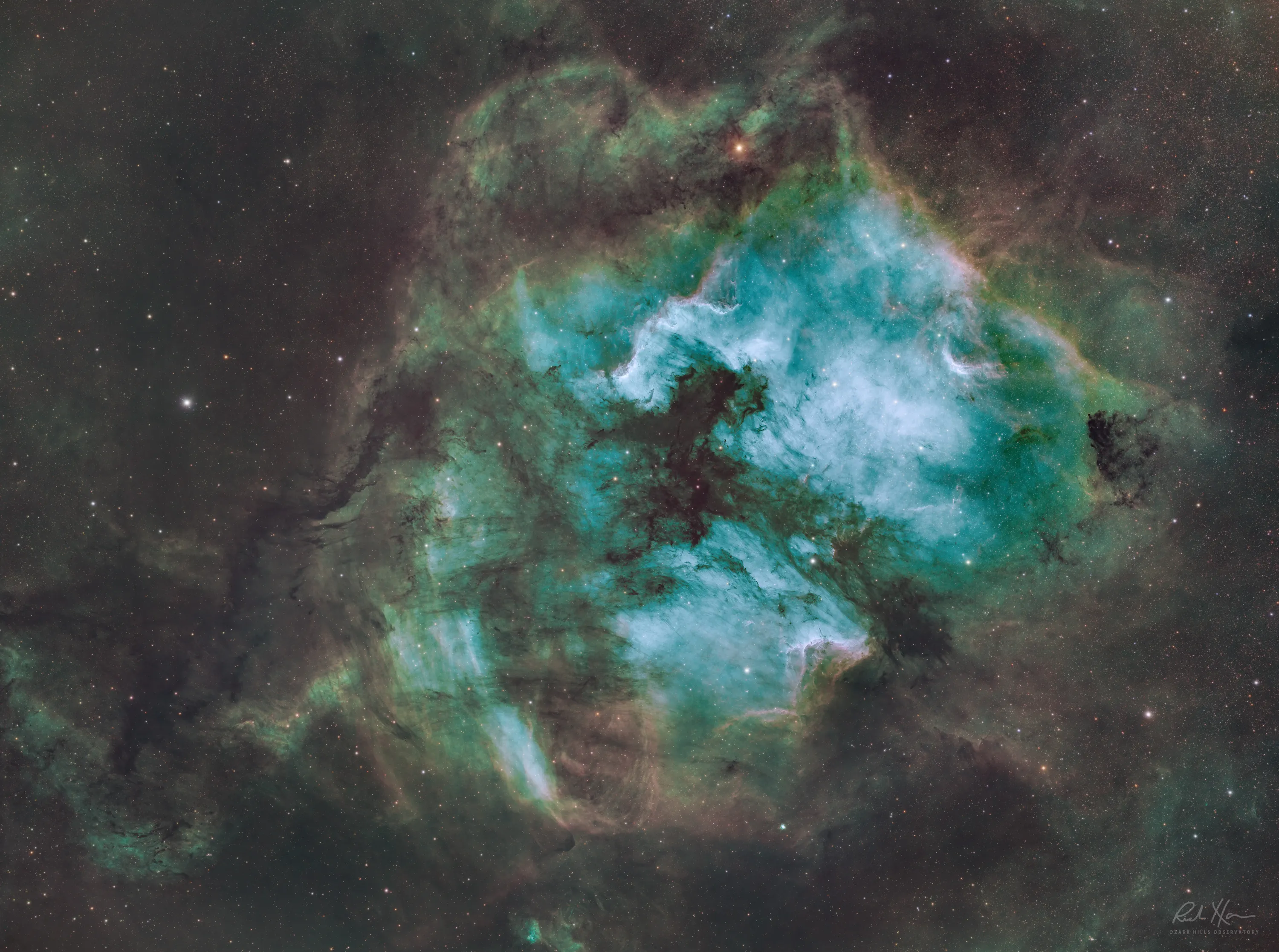
I used my Takahashi FSQ-106EDX4 and ZWO 461MM medium format camera to capture what I feel is one of the best astrophotos of the North America Nebula published anywhere to date.
Before I dig into the specifics of the North America Nebula before you, I fully confess that calling it the “North America Nebula” is a stretch, especially at this resolution. It barely resembles the continent of North America in my eyes. However, that is what it is called: NGC 7000, also cataloged as Caldwell 20.
Make sure to tap the photo above to explore the full resolution of the field - worth it.
If you want to pixel peep here is a much larger version: https://ozarkhillsobservatory.com/uploads/website_assets_178490520357681.jpg
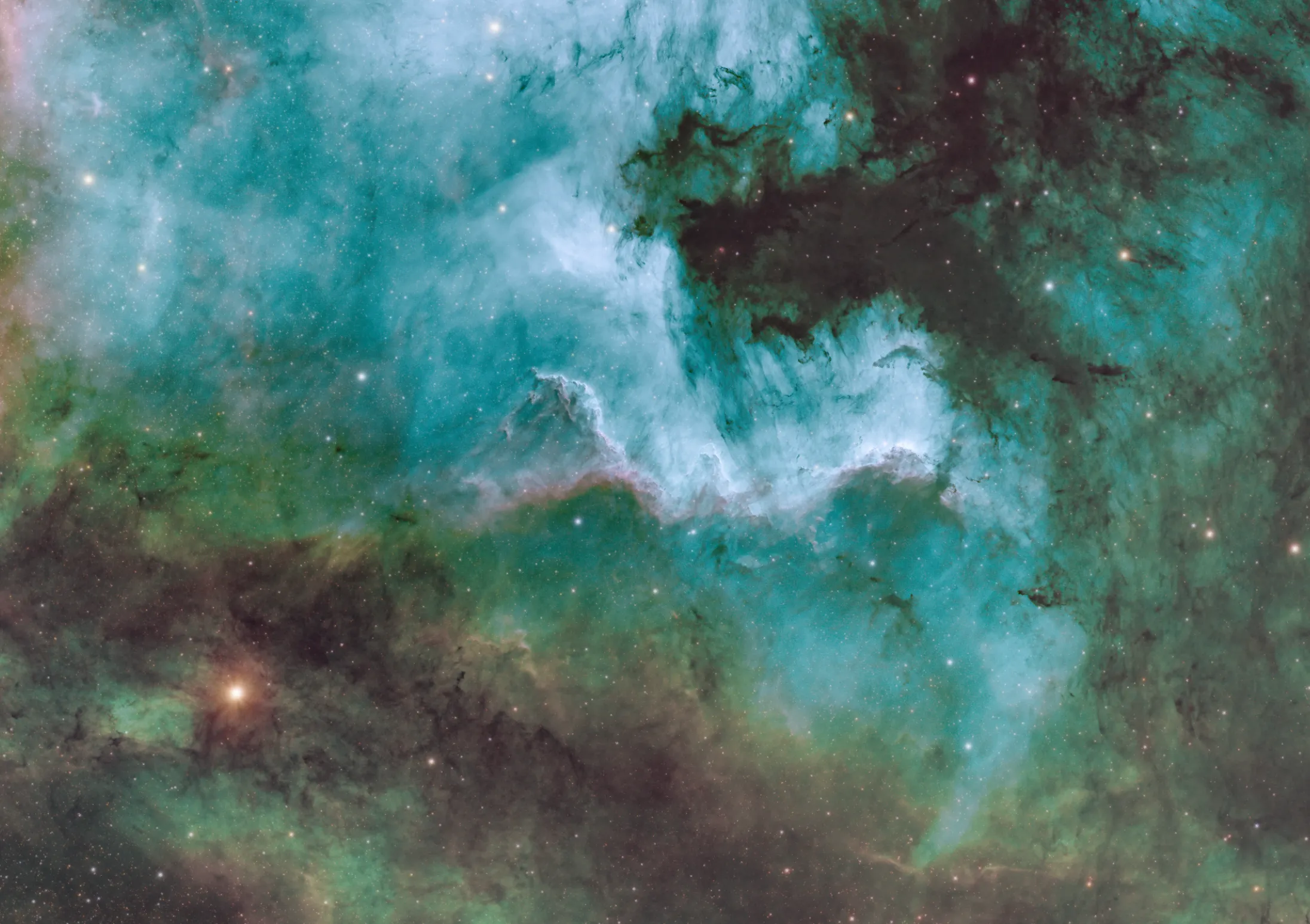
The same field contains the Pelican Nebula, IC 5070 and IC 5067, although I can barely make out a pelican in it, either. There is also IC 5068, the dark molecular cloud LDN 935 separating the brighter regions, and the Cygnus Wall - the dense ridge of gas, dust, and active star formation that traditionally forms the “Mexico and Central America” portion of NGC 7000.
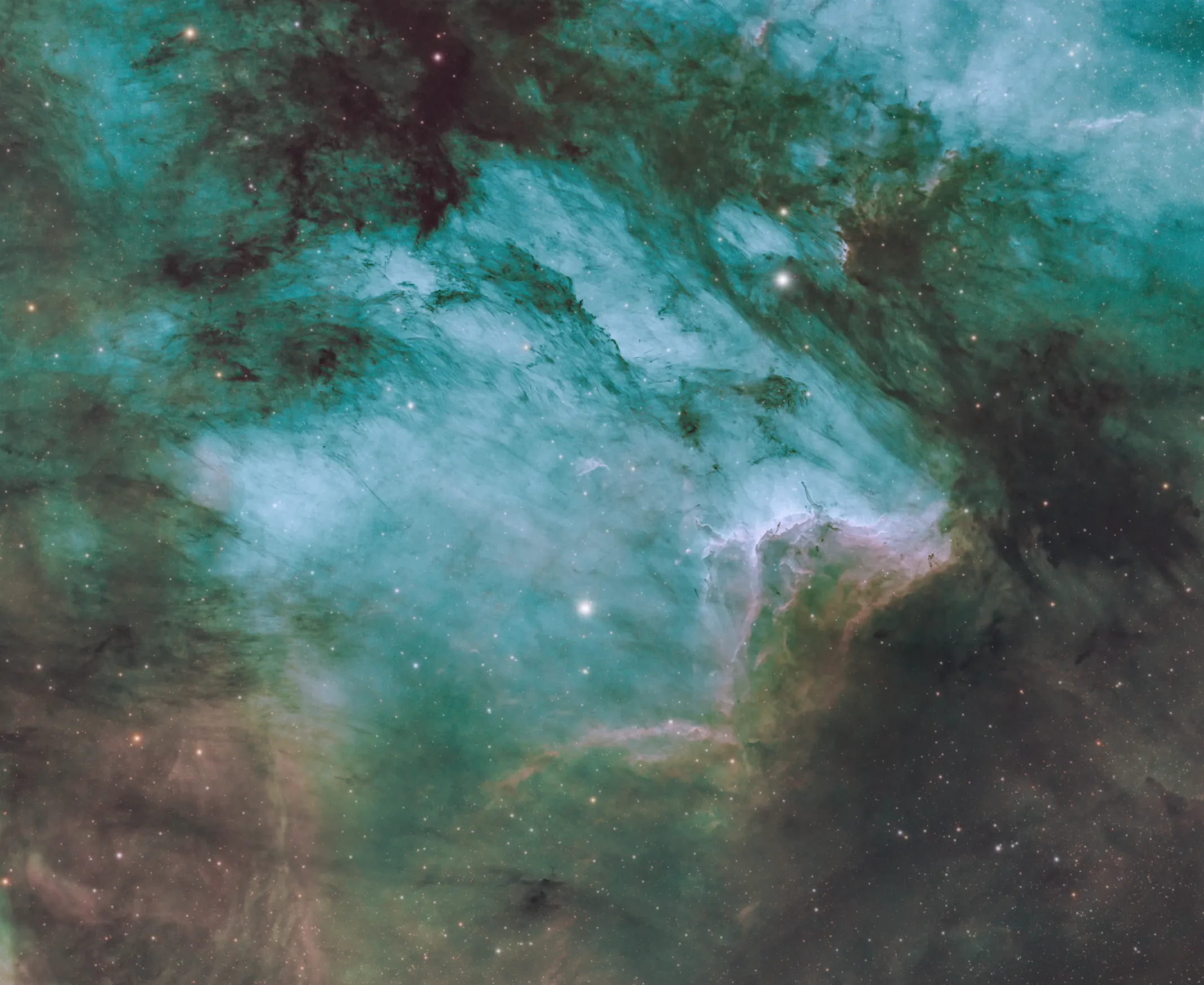
When many objects in the night sky were discovered, cataloged, and eventually given their familiar names, researchers did not have a Takahashi FSQ-106EDX4 and a 102-megapixel medium-format camera at their disposal. They were looking through very different instruments and, later, working with photographic plates that revealed only a fraction of what we can capture today. Many objects still carry those legacy names even though modern equipment shows them in an entirely different way. In my book, this is one of the best examples.
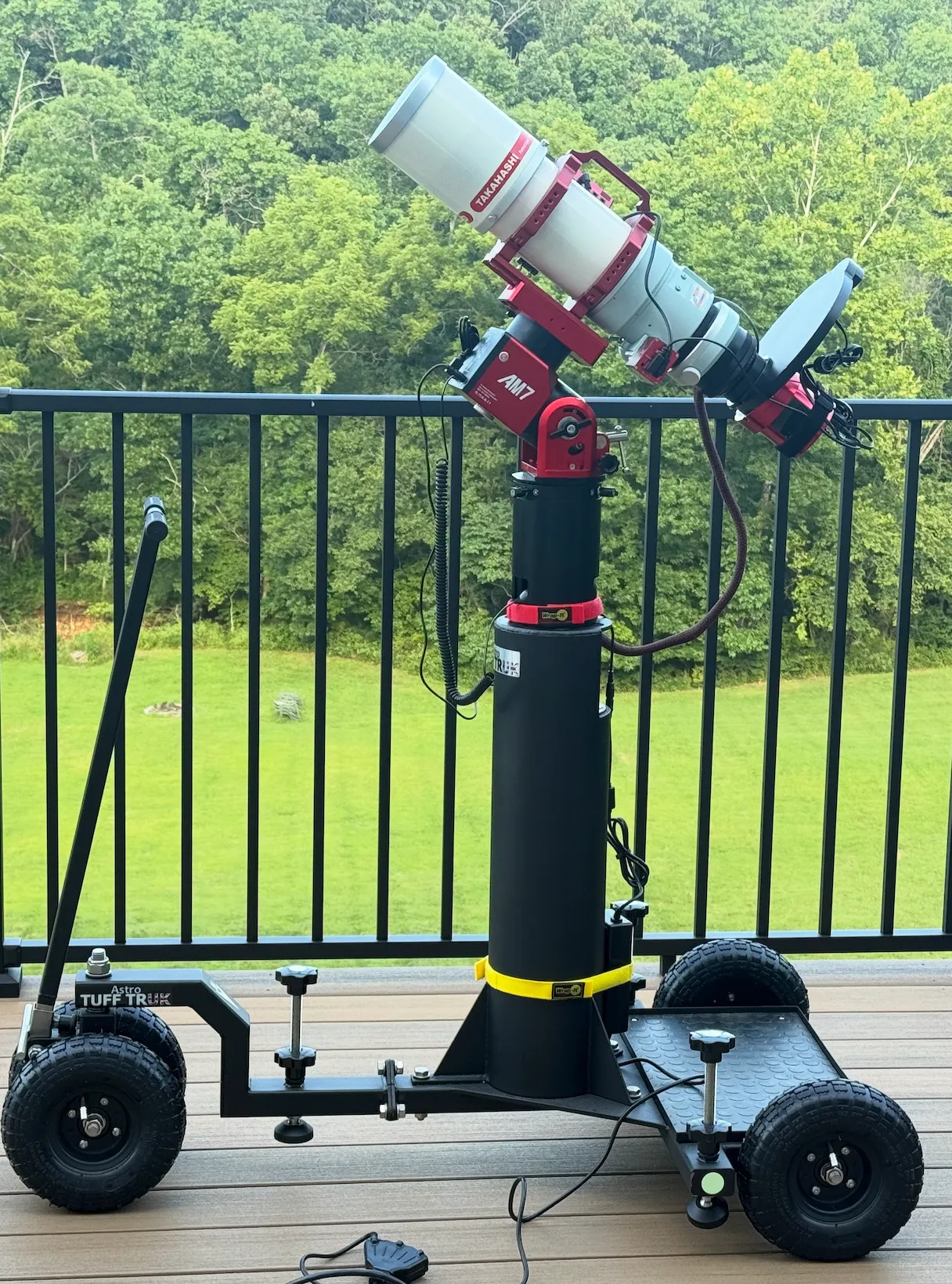
This astrophoto was taken from my patio in Missouri using my favorite wide-field rig: the Takahashi FSQ-106EDX4 paired with its 645 0.72x reducer, what I usually call the “.7 reducer.” That combination takes the FSQ from its native 530mm focal length at f/5 down to 380mm at f/3.6, while maintaining a 60mm corrected image circle designed to handle medium-format sensors.
That is where the ZWO ASI461MM comes in. Its sensor measures roughly 44 × 33mm with a 54.8mm diagonal, so it takes real advantage of everything this telescope and reducer can deliver. Each full-resolution frame is 11,656 × 8,750 pixels, or 101,990,000 pixels in a single exposure. At 16 bits, one uncompressed frame contains roughly 204MB of data before calibration or processing even begins.
The resulting field is approximately 6.6 × 5 degrees at about 2 arcseconds per pixel. It is absolutely a wide-field system, but it can still dig surprisingly far into an object. That is why this is my favorite wide-field rig. It does not simply show a large area of sky—it fills that area with an almost ridiculous amount of information.
For the nebula itself, I used Chroma 3nm SII, H-alpha, and OIII filters. These filters isolate extremely narrow portions of the spectrum emitted by ionized sulfur, hydrogen, and oxygen. That tight 3nm bandpass provides excellent contrast and background suppression, which is especially valuable when imaging from a patio rather than a remote dark-sky observatory.
I collected five hours through each narrowband filter: 60 exposures of 300 seconds in SII, 60 in H-alpha, and 60 in OIII, all with the ASI461MM set to gain zero. That gave me 15 hours of SHO data.
I also captured 15 exposures each through Chroma red, green, and blue filters at 180 seconds per frame. Those RGB frames added another two hours and 15 minutes and helped give the stars better color and depth. Finally, I collected 10 luminance frames at 600 seconds each, another hour and 40 minutes, to help fill in the finer details. Altogether, the finished image represents 18 hours and 55 minutes of exposure across 235 individual full-resolution frames.
The entire system rode on the ZWO AM7 mount, which guided between roughly 0.28 and 0.50 arcseconds RMS on most nights. Guiding was handled by a William Optics 50mm guide scope and ZWO ASI290MM camera, with the sequence controlled through the ASIAIR. Everything sat on an Astro TUFF TRUK pier, giving me a solid but movable platform on the patio.
Resolution is king, and this image demonstrates perfectly where we are today as amateur astronomers. From a patio in Missouri, a wide-field telescope can collect nearly 102 million pixels in every frame and uncover layers of structure that the early observers who named these objects could never have seen.
Call it North America. Call it a Pelican. I still have to use my imagination for both. What I can see without any imagination at all is an enormous field of hydrogen, oxygen, sulfur, dust, stars, and active stellar creation - and that is far more interesting than the name.
North America and Pelican Nebula Wide-Field Complex
Astrophotographer: Richard Harris
Object: NGC 7000 North America Nebula, IC 5070/IC 5067 Pelican Nebula, IC 5068, LDN 935, and the Cygnus Wall
Date: July 20th - July 23rd, 2026
Location: Strafford, Missouri, USA
Telescope: Takahashi FSQ-106EDX4 with 0.72× 645 Reducer (380mm, f/3.6)
Mount: ZWO AM7 harmonic-drive mount
Camera: ZWO ASI461MM Pro medium-format monochrome camera, Gain 0
Filters: Chroma RGB and 3nm SHO filters
Guide Scope: William Optics 50mm
Guide Camera: ZWO ASI290MM Mini
Guiding: Approximately 0.28–0.50 arcseconds RMS
Controller: ZWO ASIAIR
Pier: Astro TUFF TRUK Pier
Acquisition:
Sulfur II: 60 frames at 300 seconds = 5 hours
Hydrogen-alpha: 60 frames at 300 seconds = 5 hours
Oxygen III: 60 frames at 300 seconds = 5 hours
Red: 15 frames at 180 seconds = 45 minutes
Green: 15 frames at 180 seconds = 45 minutes
Blue: 15 frames at 180 seconds = 45 minutes
Luminance: 10 frames at 600 seconds = 1 hour, 40 minutes
Total Frames: 235
Total Acquisition Time: 18 hours, 55 minutes
Calibration Frames: None
Processing: PixInsight and Photoshop
Bortle Class: 3–4
About the Author
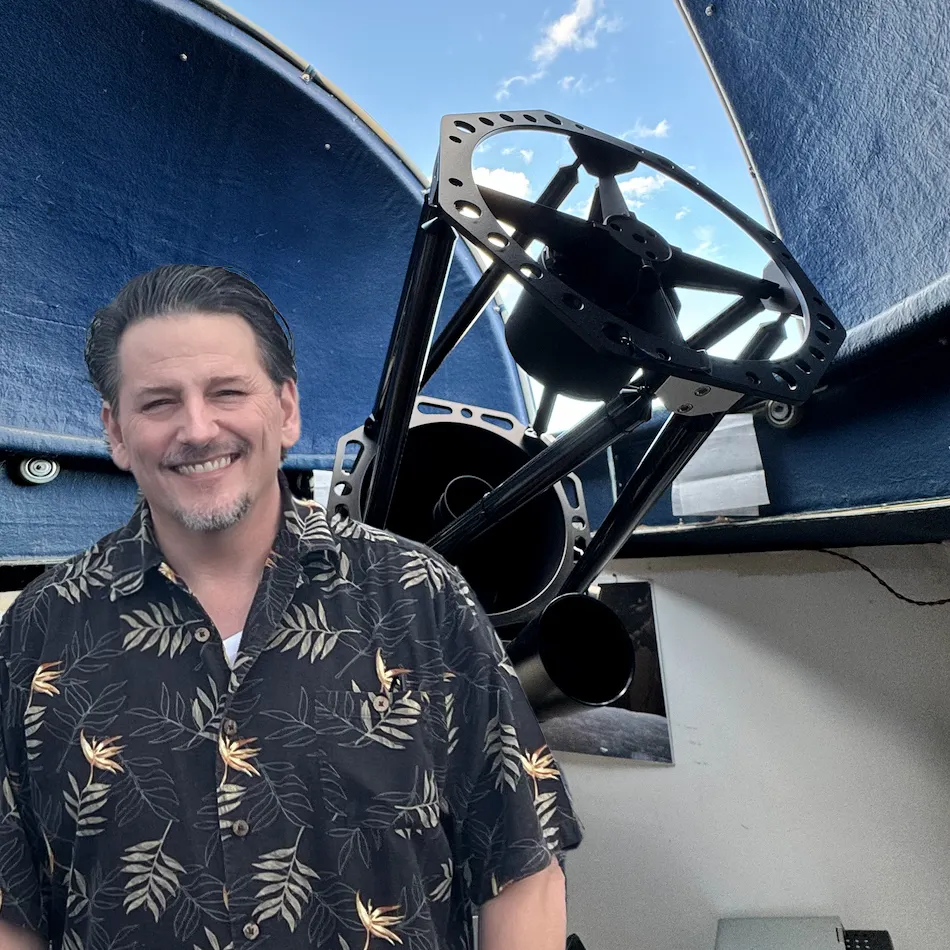
Meet Richard Harris. He is the founder and editor-in-chief of ScopeTrader, with over 40 years of experience in observational astronomy and astrophotography. He serves as the director of the Ozark Hills Observatory, where his research and imagery have been featured in scientific textbooks, academic publications, and educational media. Among his theoretical contributions is a cosmological proposition known as The Harris Paradox, which explores deep-field observational symmetry and time-invariant structures in cosmic evolution. A committed citizen scientist, Harris is actively involved with the Springfield Astronomical Society, the Amateur Astronomers Association, the Astronomical League, and the International Dark-Sky Association. He is a strong advocate for reducing light pollution and enhancing public understanding of the cosmos. In 2001, Harris developed the German Equatorial HyperTune - a precision mechanical enhancement for equatorial telescope mounts that has since become a global standard among amateur and professional astronomers seeking improved tracking and imaging performance. Beyond the observatory, Harris is a serial entrepreneur and founder of several tech-based ventures. Driven by both scientific curiosity and creative innovation, Harris continues to blend the frontiers of astronomy and technology, inspiring others to explore the universe and rethink the possibilities within it. When he's not taking photos of our universe, you can find him with family, playing guitar, or traveling.