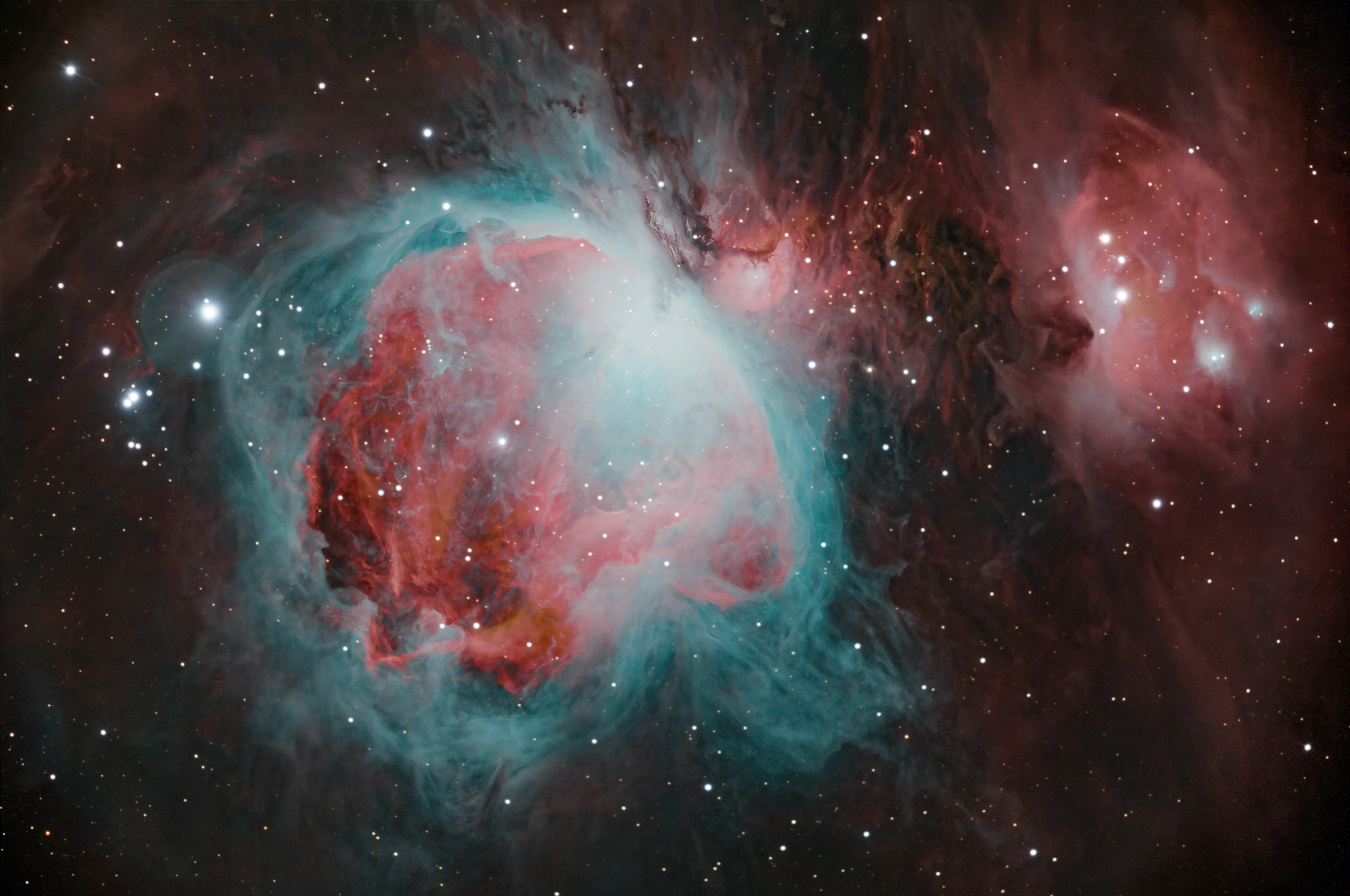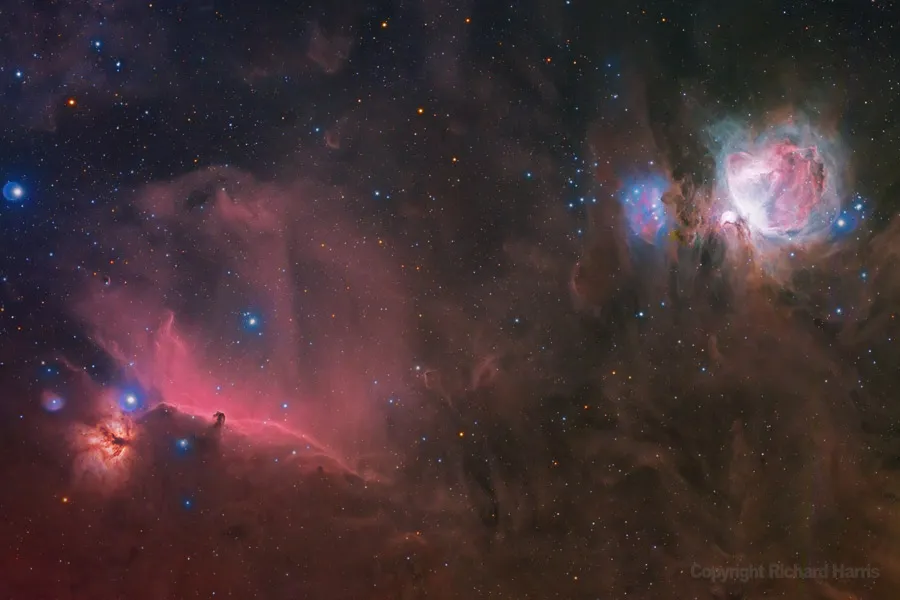
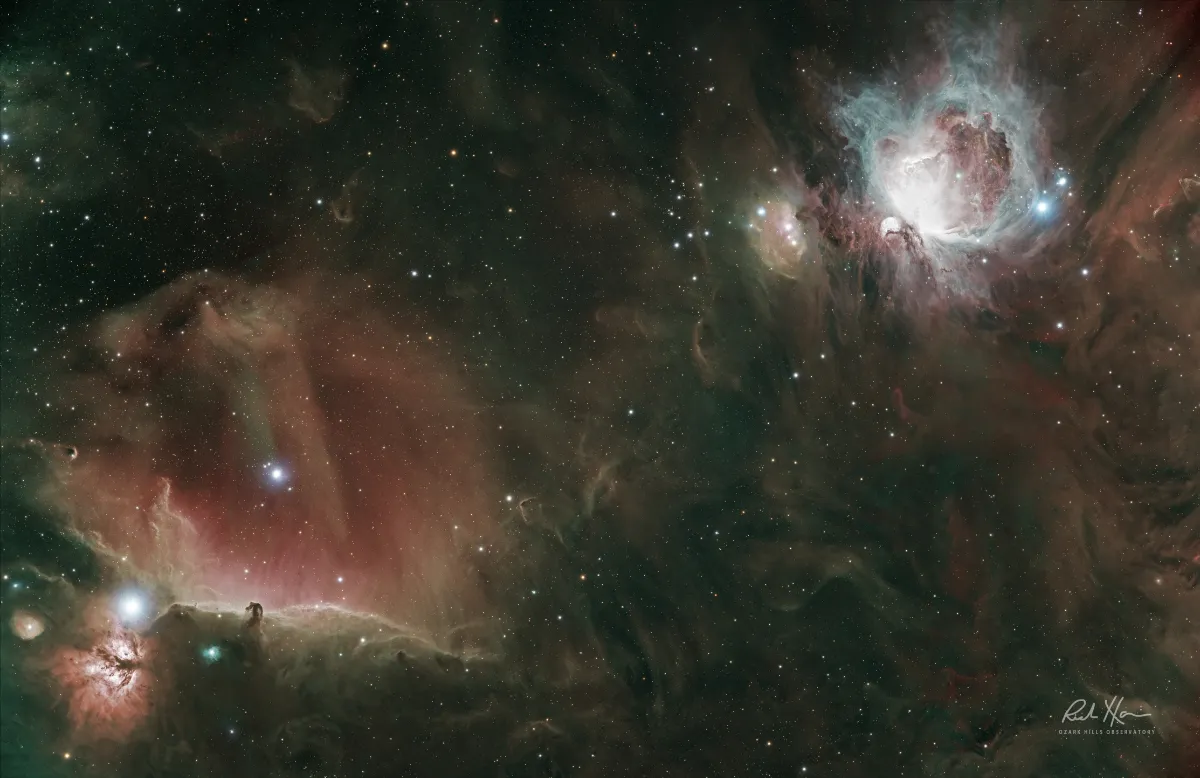
We return to the Orion region after 2 years to uncover new details using our latest gear, the Takahashi FSQ-106 EDX4, a 6200MM camera, and 3nm Chroma filters. This setup promises to reveal even more breathtaking features than my 2022 attempt.
Categories
Filters

The Ozark Hills Observatory is dedicated to fostering a deep and profound connection between humanity and the God of our universe. Our mission revolves around providing a space for astronomical exploration, education, and appreciation in the serene embrace of the Ozark Hills. With state-of-the-art telescopes and a commitment to preserving the natural beauty of our surroundings, we strive to inspire a sense of wonder and curiosity about the cosmos. Whether you're a seasoned astronomer or a curious novice, the Ozark Hills Observatory invites you to gaze upward, unravel the mysteries of the night sky, and unlock the boundless treasures of our universe.



Enter your email address to get updates from the observatory, including new photo posts.